By Dr. Abhishek Kasa
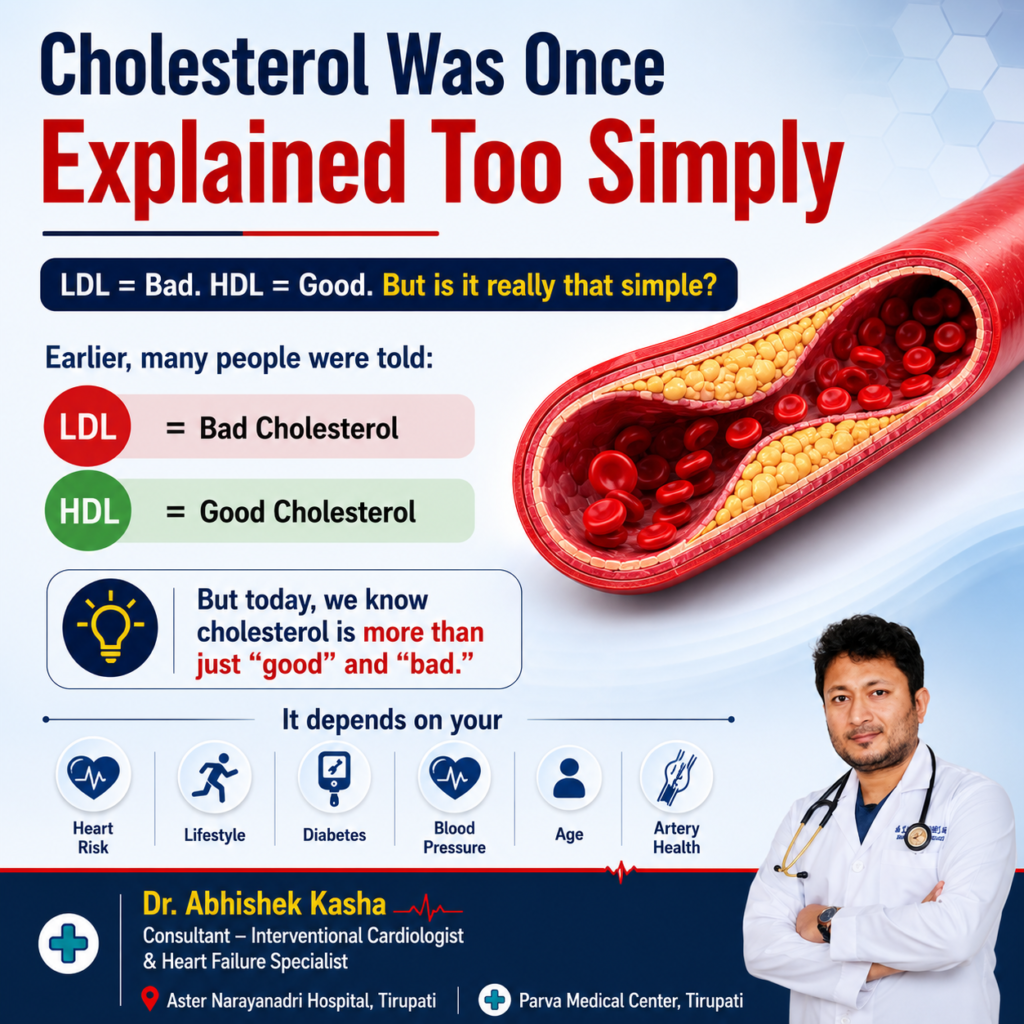
For many years, cholesterol was explained in a very simple way.
LDL was called “bad cholesterol.”
HDL was called “good cholesterol.”
Patients were told to reduce LDL, increase HDL, eat clean, avoid oily foods and stay active. This simple message helped many people understand heart health better. But today, cardiology has moved much further.
Modern heart care is no longer only about asking, “Is my LDL normal?” or “Is my HDL good?”
The better question is:
How much harmful cholesterol particle burden is actually circulating in the blood?
This is where newer markers like ApoB, Lp(a), remnant cholesterol and overall cardiovascular risk assessment become important.
The Old Cholesterol Understanding
Earlier, cholesterol reports were mostly explained using four common values:
LDL cholesterol, HDL cholesterol, total cholesterol and triglycerides.
LDL cholesterol was considered harmful because it can deposit cholesterol inside artery walls. Over time, this can contribute to plaque formation, narrowing of arteries, heart attacks and strokes.
HDL cholesterol was considered protective because it helps carry cholesterol away from the arteries and back to the liver.
This basic understanding is still useful. LDL cholesterol is still very important. Lowering LDL, especially in high-risk patients, can reduce the chances of heart attack and stroke.
But the story does not end there.
Why LDL Alone May Not Tell the Full Story
Two people can have the same LDL number, but their actual heart risk may not be the same.
Why?
Because LDL cholesterol tells us how much cholesterol is being carried inside LDL particles. But it does not always tell us how many harmful particles are present.
Imagine two roads.
One road has a few large trucks carrying heavy loads.
Another road has many small vehicles carrying smaller loads.
The total load may look similar, but the traffic burden is different.
In the same way, a person may have a “normal” LDL level but still have a higher number of harmful cholesterol-carrying particles. These particles can enter the artery wall and contribute to plaque formation.
That is why advanced risk markers like ApoB are becoming more relevant.
What Is ApoB?
ApoB, or Apolipoprotein B, is a protein found on harmful cholesterol particles.
Most atherogenic particles — meaning particles that can contribute to artery blockage — carry one ApoB protein. These include LDL particles, VLDL particles, IDL particles, remnants and Lp(a).
So ApoB gives a better idea of the number of harmful cholesterol particles in circulation.
This matters because heart risk is not only about how much cholesterol is present. It is also about how many particles are carrying that cholesterol through the bloodstream.
More ApoB-containing particles can mean more chances for those particles to enter the artery wall and build plaque.
Can LDL Be Normal but ApoB Be High?
Yes.
This is one of the most important points patients should understand.
Some people may look “normal” on a routine lipid profile, but their ApoB may still be high. This can happen especially in people with:
Diabetes
Insulin resistance
Obesity
High triglycerides
Fatty liver
Family history of heart disease
Metabolic syndrome
Previous heart attack or angioplasty history
In such patients, relying only on LDL may underestimate risk.
ApoB can help your cardiologist understand whether the number of harmful cholesterol particles is higher than expected.
What Is Lp(a)?
Lp(a), pronounced “L-P-little-a,” is another important cholesterol-related marker.
It is similar to LDL, but it has an extra protein attached to it. This makes it more concerning in some patients.
Lp(a) is important because it can increase the risk of heart disease even when routine cholesterol numbers appear acceptable.
Another key point is that Lp(a) is mostly genetic. This means it often runs in families. Diet and exercise are very important for overall heart health, but they usually do not reduce Lp(a) significantly.
That is why some people who eat well, exercise regularly and maintain a healthy lifestyle may still have increased inherited cholesterol risk.
Who Should Consider Lp(a) Testing?
Lp(a) testing may be useful for people with:
Family history of early heart attack or stroke
Heart attack at a young age
Repeated artery blockage despite treatment
High cholesterol running in the family
Aortic valve disease
Unexplained cardiovascular risk despite a healthy lifestyle
Many patients never test Lp(a) because it is not always included in a routine lipid profile. But for selected patients, it can provide valuable information.
What Is Remnant Cholesterol?
Remnant cholesterol is another hidden part of the cholesterol story.
After we eat, the body transports fats and cholesterol through particles called triglyceride-rich lipoproteins. When these particles are partly broken down, they become remnant particles.
These remnants can also enter artery walls and contribute to plaque buildup.
Remnant cholesterol is often linked with high triglycerides, diabetes, obesity and insulin resistance.
This is why patients with high triglycerides should not ignore the report even if LDL seems manageable. The remaining cholesterol burden may still increase risk.
Is HDL Always Good?
HDL is commonly called “good cholesterol,” but even this idea is more complex today.
Low HDL can be associated with higher cardiovascular risk. But very high HDL is not always automatically protective.
The function of HDL may matter more than just the number.
So instead of focusing only on “increase HDL,” the better approach is to improve overall metabolic and heart health through:
Regular exercise
Weight management
Smoking cessation
Blood pressure control
Diabetes control
Healthy food choices
Proper sleep
Reduced alcohol intake
Stress management
HDL should not be viewed as a magic shield against heart disease.
Why a Normal Cholesterol Report May Not Always Mean Low Risk
A routine cholesterol test is useful, but it is not the full heart-risk picture.
A patient may have normal LDL but still have high ApoB.
A patient may have controlled cholesterol but high Lp(a).
A patient may have high triglycerides and remnant cholesterol risk.
A patient may have family history that changes the risk level.
A patient may have diabetes or hypertension that increases heart risk.
That is why cardiologists do not treat only a number. They treat the whole patient.
What Should Patients Ask Their Cardiologist?
Instead of asking only, “Is my cholesterol normal?” patients can ask:
What is my overall heart risk?
Is my LDL target appropriate for my risk level?
Should I check ApoB?
Should I check Lp(a) once?
Are my triglycerides and remnant cholesterol a concern?
Do I need lifestyle changes, medicines or both?
Is my family history important?
Should I get further risk assessment?
These questions can help detect hidden risk earlier.
Lifestyle Still Matters
Even with advanced cholesterol testing, lifestyle remains the foundation of heart prevention.
A heart-protective lifestyle includes:
Eating more vegetables, fruits, pulses, whole grains and nuts
Reducing deep-fried foods, trans fats, excess sugar and processed foods
Choosing healthy fats in moderation
Exercising regularly
Maintaining healthy body weight
Avoiding smoking and tobacco
Controlling diabetes and blood pressure
Taking medicines regularly if prescribed
But lifestyle should be combined with the right risk assessment. Some patients need medication even if they follow a healthy lifestyle, especially when genetic or high-risk factors are present.
Final Message
Cholesterol is no longer just:
LDL = Bad
HDL = Good
That simple idea helped awareness, but modern heart care looks deeper.
Today, we need to understand:
ApoB
Lp(a)
Remnant cholesterol
Triglycerides
Family history
Diabetes and blood pressure
Overall cardiovascular risk
A normal-looking cholesterol report does not always mean there is no risk.
The goal is not to create fear. The goal is better awareness, earlier detection and the right prevention plan.
If you have a family history of heart disease, diabetes, high triglycerides, repeated cholesterol issues or a heart problem at a young age, speak to a cardiologist about a more complete heart-risk assessment.
Modern heart care starts with better awareness.
Consult Dr. Abhishek Kasa for heart-risk evaluation and cholesterol management guidance.
FAQs
1. Is LDL cholesterol still important?
Yes. LDL cholesterol is still one of the most important markers for heart disease risk. But in some patients, LDL alone may not show the complete risk.
2. What is ApoB in a cholesterol test?
ApoB helps estimate the number of harmful cholesterol particles in the blood. Higher ApoB may mean higher artery risk, even when LDL appears normal.
3. What is Lp(a)?
Lp(a) is a cholesterol-related particle that is mostly genetic. High Lp(a) may increase heart disease risk and may not improve much with diet alone.
4. Should everyone test ApoB and Lp(a)?
Not always. These tests are especially useful for people with family history of heart disease, diabetes, high triglycerides, early heart attack, or unexplained risk.
5. Can lifestyle reduce heart risk?
Yes. Lifestyle changes are very important. But some patients may also need medicines or advanced testing depending on their overall risk.
6. Can HDL be too high?
HDL is generally considered helpful, but very high HDL is not always automatically protective. Overall heart risk matters more than one number.
7. What should I do if my cholesterol report is normal but I have family history?
Consult a cardiologist. You may need a more detailed risk assessment, including tests like ApoB, Lp(a), or other evaluations depending on your history.