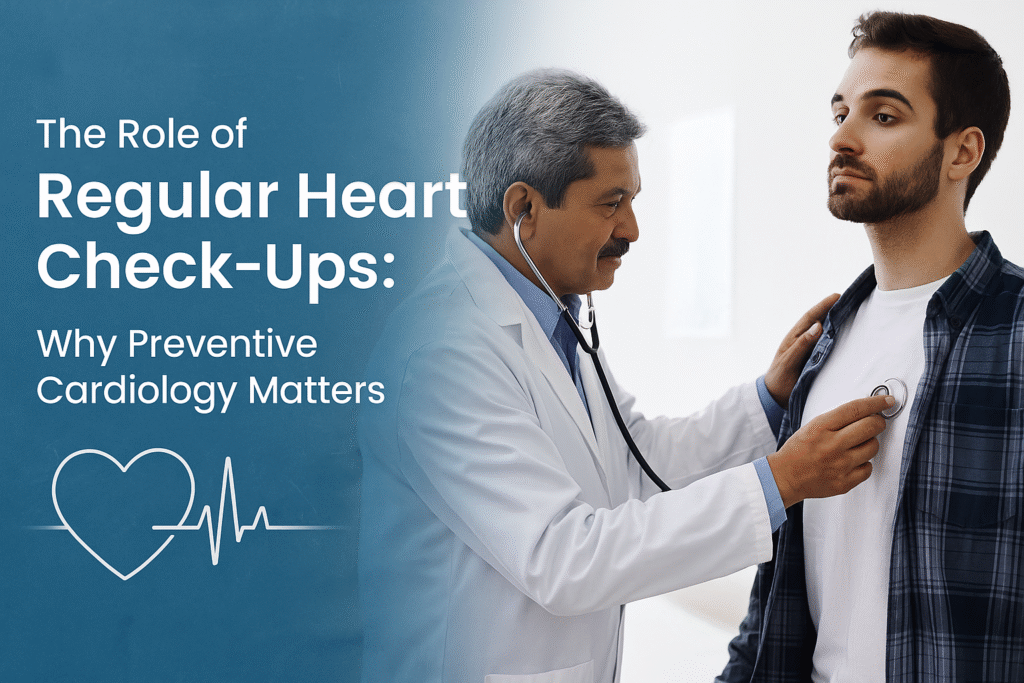
Heart disease remains the leading cause of death globally, and India is no exception. Despite advancements in cardiology and life-saving interventions, many people still delay medical consultations until symptoms become too severe to ignore. Unfortunately, by the time these symptoms appear, the disease has often progressed to an advanced stage.
Regular heart check-ups are the foundation of preventive cardiology—an approach that emphasizes early detection, risk factor management, and lifestyle modifications to prevent the onset or worsening of cardiovascular disease.
In this blog, we will explore why heart check-ups are important, what they involve, who should get them, and how preventive cardiology can protect lives.
1. Understanding Preventive Cardiology
Preventive cardiology is not just about treating heart disease but preventing it before it becomes life-threatening. This branch of medicine focuses on:
- Early detection of risk factors such as high blood pressure, diabetes, obesity, or cholesterol imbalances.
- Identifying silent heart disease through diagnostic screenings.
- Helping patients adopt heart-healthy lifestyles to lower long-term risks.
- Using preventive therapies (like medications, stents, or structural heart interventions) where necessary.
By integrating preventive care into routine medical visits, cardiologists reduce the likelihood of heart attacks, strokes, or sudden cardiac events.
2. Why People Avoid Regular Check-Ups
Despite the benefits, many people avoid check-ups. Common reasons include:
- “I feel healthy, so why check?” – Many cardiac conditions progress silently without obvious symptoms until it’s too late.
- Fear of diagnosis – Some avoid tests because they fear bad news.
- Time and cost – People prioritize other expenses and commitments.
- Lack of awareness – Preventive cardiology is still an under-discussed area in public health awareness.
Unfortunately, heart disease is often called the “silent killer” because it progresses quietly. Preventive cardiology ensures that even silent risks are detected early.
3. Who Should Go for Regular Heart Check-Ups?
Anyone can benefit from preventive cardiology, but certain groups are at higher risk:
- Age Factor
- Men over 40 and women over 50 are at increased risk.
- Post-menopausal women lose the natural heart protection provided by estrogen.
- People with Risk Factors
- High blood pressure
- High cholesterol
- Diabetes or prediabetes
- Obesity and sedentary lifestyle
- Chronic stress
- Family History
- If parents or siblings had heart disease, especially at an early age, you should consider early screening.
- Lifestyle Habits
- Smoking, alcohol consumption, lack of exercise, and unhealthy diet significantly increase risks.
4. What Does a Regular Heart Check-Up Include?
A typical heart check-up may include:
- Basic Clinical Examination – Blood pressure, weight, BMI, and medical history.
- Blood Tests – Cholesterol, triglycerides, blood sugar, kidney function.
- Electrocardiogram (ECG) – Detects arrhythmias or heart muscle strain.
- Echocardiogram – Ultrasound imaging to evaluate heart chambers and valves.
- Treadmill Test (TMT) – Assesses how your heart performs under stress.
- Advanced Imaging – CT coronary angiography or cardiac MRI for high-risk patients.
Preventive cardiology also includes risk stratification, which helps doctors design a customized plan for lifestyle, diet, exercise, and medication.
5. Benefits of Regular Heart Check-Ups
- Early Detection Saves Lives
- Many conditions like high cholesterol or blocked arteries show no symptoms initially.
- Better Treatment Outcomes
- When caught early, most heart problems are easier and cheaper to manage.
- Cost-Effective in the Long Run
- Preventing a heart attack is far less expensive than emergency treatments like bypass surgery or stenting.
- Peace of Mind
- Knowing your heart health status reduces anxiety and promotes proactive living.
- Improved Longevity
- People who undergo regular heart health check-ups often live longer, healthier lives.
6. Preventive Cardiology and Chronic Conditions
Heart Failure
Routine check-ups help manage symptoms, monitor ejection fraction (heart pumping ability), and adjust therapies.
Diabetes
Diabetic patients are two to four times more likely to develop cardiovascular disease. Regular screenings help control both blood sugar and heart risks.
Hypertension
Uncontrolled high blood pressure silently damages arteries. Regular monitoring prevents strokes and heart attacks.
Obesity
Excess weight stresses the heart. Preventive cardiology helps with weight management strategies.
7. Lifestyle Modifications Through Preventive Cardiology
- Dietary Guidance – Adopting a heart-healthy diet rich in fruits, vegetables, and whole grains while limiting trans fats, salt, and sugar.
- Exercise Programs – Regular physical activity, at least 30 minutes daily.
- Stress Management – Yoga, meditation, or counseling for stress reduction.
- Smoking Cessation Programs – Structured plans to quit smoking.
- Sleep and Routine – Adequate rest reduces cardiac stress.
8. The Role of Technology in Preventive Cardiology
- Wearables like smartwatches track heart rate, oxygen levels, and sleep quality.
- Remote Monitoring allows doctors to detect abnormalities even outside the clinic.
- Artificial Intelligence (AI) helps in risk prediction based on large datasets.
These tools make preventive cardiology more accessible and effective.
9. When to See a Cardiologist Urgently
While preventive care focuses on early detection, certain warning signs require immediate medical attention:
- Chest pain or discomfort
- Shortness of breath
- Palpitations or irregular heartbeat
- Swelling in ankles or feet
- Sudden dizziness or fainting
Delaying care in such cases can be life-threatening.
10. Preventive Cardiology in Andhra Pradesh
At AK Heart & Diabetes Center, Sullurpeta, and Aster Narayanadri Hospital, Tirupati, preventive cardiology is an essential part of care. These centers specialize in comprehensive check-ups, interventional cardiology, and advanced therapies.
Patients can access:
- General and interventional cardiology services
- Heart check-up packages
- Diabetes management integrated with cardiac care
- Specialized treatments like angioplasty, stenting, TAVR, and complex interventions
By combining prevention with cutting-edge treatment, these hospitals help patients manage risks and live healthier lives.
FAQs on Regular Heart Check-Ups
1. How often should I get a heart check-up?
- Adults over 40 should consider annual check-ups.
- Younger adults with risk factors may also need yearly assessments.
2. Are heart check-ups painful?
- Most tests (ECG, blood tests, echo) are non-invasive and painless.
3. Can lifestyle changes replace heart check-ups?
- No. While lifestyle changes reduce risk, check-ups detect silent issues that lifestyle alone cannot.
4. Do women need the same check-ups as men?
- Yes. Women often have atypical symptoms, so preventive cardiology is equally important.
5. If my reports are normal, do I still need check-ups?
- Yes. Heart health can change over time due to age, stress, or lifestyle factors.
6. How much does a preventive heart check-up cost?
- Costs vary by location, but most centers offer affordable packages compared to the high cost of emergency cardiac treatments.
7. Can preventive cardiology reduce my risk of heart attack completely?
Contact Details
📍 AK Heart & Diabetes Center – Annapurna Polyclinic (Sullurpeta)
Address:
Old Name – Dr. Masthanamma Hospital
Government Hospital Road, Near Government Hospital
Sullurpeta, Andhra Pradesh – 524121
Services: General & Interventional Cardiology, Diabetes Management, Heart Check-ups
Timings: Mon–Sat | 9 AM – 9 PM
📍 Aster Narayanadri Hospital (Tirupati)
Address:
Aster Narayanadri Hospital – Cardiology Department
National Highway 71, Renigunta Road, SV Auto Nagar
Tirupati, Andhra Pradesh – 517506
Specialties: Heart Failure, Angioplasty, Stenting, TAVR/TAVI, Complex Coronary Interventions
Hours: Open 24 hours