By Dr. Abhishek Kasha, Interventional Cardiologist – Aster Narayanadri Hospital, Tirupati
Sudden Cardiac Death (SCD) — The Hidden Threat Among the Young
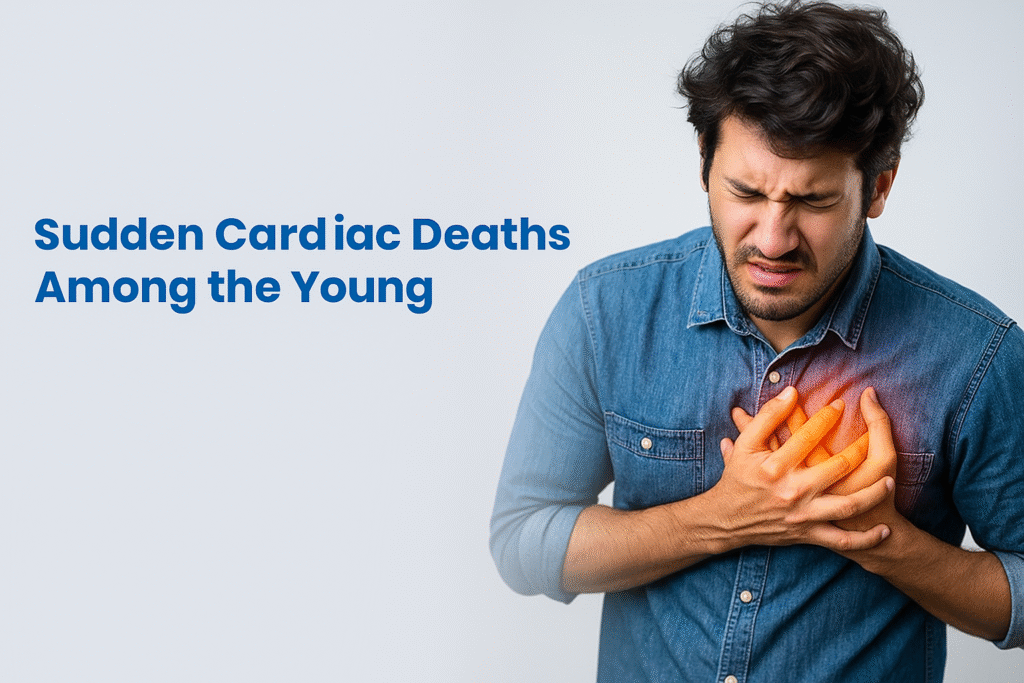
Every year, we read heartbreaking stories of young athletes, students, or professionals who collapse suddenly and never recover. These are not isolated incidents — they reflect a growing, yet preventable, problem called Sudden Cardiac Death (SCD).
While heart attacks in older adults are mostly due to blocked arteries, sudden deaths in younger individuals are often caused by electrical or structural heart abnormalities — conditions that silently exist from birth or develop gradually without symptoms.
How Common Is SCD in the Young? (Important Metrics)
- SCD accounts for 1 in 50,000–100,000 deaths annually among people < 35 years.
- Around 70 % of such deaths occur without any previous warning symptom.
- Among young athletes, hypertrophic cardiomyopathy (HCM) is responsible for 30–40 % of cases.
- Electrical channelopathies (like long QT or Brugada syndrome) account for another 15–20 %.
- Prompt defibrillation within 3 minutes increases survival chances by over 70 %.
(Sources: AHA 2024 update on Sudden Cardiac Arrest in Young People)
Why Do These Deaths Occur Suddenly?
The heart beats through an intricate electrical system. When this system malfunctions due to inherited or acquired conditions, the heart can go into ventricular fibrillation — a chaotic rhythm that stops effective blood circulation.
Common causes include:
| Category | Example Conditions | Description |
|---|---|---|
| Structural Abnormalities | Hypertrophic Cardiomyopathy (HCM), Dilated Cardiomyopathy (DCM), Arrhythmogenic Right Ventricular Cardiomyopathy (ARVC) | Thickened or stretched heart muscle causing rhythm disturbances |
| Electrical Abnormalities (Channelopathies) | Long QT Syndrome, Brugada Syndrome, CPVT | Defects in the heart’s electrical channels leading to fatal arrhythmias |
| Congenital Coronary Anomalies | Abnormal origin of coronary arteries | May cause ischemia during exercise |
| Myocarditis and Post-Viral Damage | Often linked with viral infections like COVID-19 myocarditis | Causes sudden electrical instability |
The Warning Signs You Should Never Ignore
Even if rare, some early clues can save lives if recognized on time:
- Unexplained fainting (syncope) — especially during exercise or emotional stress
- Chest pain or shortness of breath not related to fitness level
- Palpitations or a feeling of “heart skipping beats”
- Seizure-like episodes without neurological cause
- Family history of sudden death or young cardiac arrest
These should always trigger a consultation with a cardiologist experienced in arrhythmia and imaging-guided assessment.
How Doctors Evaluate At-Risk Individuals
Dr. Abhishek Kasha and his team at Aster Narayanadri Hospital emphasize a comprehensive evaluation protocol for young patients with any suspicious symptoms or family history:
1. Electrocardiogram (ECG)
Detects abnormal rhythms, QT interval prolongation, and Brugada patterns.
🩺 Simple, non-invasive, and can save lives.
2. Echocardiogram (2D Echo)
Assesses heart structure, thickness, and valve function to detect cardiomyopathies.
3. Exercise Stress Test
Reveals how the heart responds under exertion, highlighting exercise-induced arrhythmias.
4. Cardiac MRI (CMR)
Provides a three-dimensional look at heart muscle integrity, fibrosis, and congenital defects.
💡 Especially useful for diagnosing HCM and ARVC.
5. Genetic Testing & Family Screening
Helps identify inherited conditions that may put relatives at risk.
6. Holter Monitor / Loop Recorder
Continuous 24- to 72-hour monitoring detects intermittent arrhythmias missed on a standard ECG.
Preventive Strategies That Save Lives
💡 1. Pre-Participation Screening
All young athletes should undergo a basic cardiac screen before competitive sports.
Countries like Italy saw a 90 % reduction in SCD among athletes after mandatory ECG screening.
💊 2. Medical Therapy
- Beta-blockers for long QT and CPVT
- Anti-arrhythmic drugs when indicated
- Avoid certain stimulants or performance drugs that trigger arrhythmias
⚡ 3. Implantable Cardioverter Defibrillator (ICD)
A lifesaving device that detects and treats lethal arrhythmias instantly by delivering a corrective shock.
🏃♂️ 4. Lifestyle and Sports Guidance
Patients with cardiomyopathies or channelopathies may need to modify exercise intensity.
Dr. Kasha advocates supervised rehabilitation and clear return-to-play criteria.
❤️ 5. Emergency Preparedness — The “Chain of Survival”
- Recognize sudden collapse
- Call for help immediately
- Begin CPR within 60 seconds
- Use an AED (Automated External Defibrillator) as soon as available
- Continue care until EMS arrives
Every minute of delay reduces survival by 10 %.
Community Awareness Matters
Dr. Kasha believes that medical excellence alone is not enough — community awareness can double survival rates.
Aster Narayanadri Hospital runs public initiatives and awareness sessions for:
- Schools and colleges in Tirupati
- Gym trainers and sports coaches
- Local youth clubs and temple marathon groups
These sessions teach hands-only CPR, recognizing cardiac emergencies, and the use of AEDs.
The Role of Advanced Cardiology in Tirupati
Under Dr. Abhishek Kasha’s guidance, Aster Narayanadri has emerged as a regional hub for:
- Complex Angioplasties with OCT/IVUS guidance
- FFR and iFR measurements for precision PCI
- High-risk coronary interventions in patients with poor heart function
- Mechanical support devices like IABP and Impella
- 24×7 heart attack and arrhythmia management team
Patients from Kadapa, Chittoor, Nellore, and Anantapur now access advanced interventions without leaving Rayalaseema.
Key Takeaways — At a Glance
| Topic | Key Metric / Insight |
|---|---|
| SCD in the Young | 1 in 50,000–100,000 population |
| Major Causes | HCM (30–40 %), Channelopathies (20 %), Congenital Anomalies (10 %) |
| Screening Benefit | ECG reduces risk by > 80 % in athletes |
| Survival with Defibrillation | 70 % if defibrillated within 3 minutes |
| Common Warning Signs | Fainting during exercise, chest pain, palpitations |
| Diagnostic Tests | ECG, ECHO, CMR, Genetic Testing |
| Preventive Devices | ICDs in high-risk cases |
| Community Action | CPR & AED training saves lives |
A Note from Dr. Abhishek Kasha
“Sudden cardiac deaths in young people are not destiny — they are signals we often miss. Every fainting episode, every unexplained chest pain in youth deserves attention. With the technology and expertise we have today, no family in Rayalaseema should lose a loved one to a preventable heart event.”
– Dr. Abhishek Kasha, MD (Cardio), DM (Interventional Cardiology), Aster Narayanadri Hospital, Tirupati
FAQs – Sudden Cardiac Death in the Young
1. Is Sudden Cardiac Death the same as a Heart Attack?
No. A heart attack is caused by a blocked artery reducing blood flow to the heart muscle. Sudden cardiac death is usually an electrical malfunction that stops the heart from beating effectively.
2. Can a Perfectly Healthy-Looking Person Have an Underlying Heart Problem?
Yes. Many young people with inherited cardiac conditions show no symptoms until a trigger (like intense exercise or stress) causes a fatal arrhythmia.
3. Who Should Undergo Heart Screening?
- Anyone with a family history of sudden death below 40 years
- Competitive athletes or fitness enthusiasts
- Individuals with unexplained syncope or palpitations
- Patients with genetic syndromes affecting the heart
4. Can SCD Be Prevented?
Absolutely. Through early diagnosis (using ECG and echo), genetic testing if needed, and lifestyle adjustments. High-risk patients can benefit from ICD implantation.
5. What to Do If Someone Collapses Suddenly?
- Check for response and breathing.
- Call emergency services immediately.
- Start CPR (hard and fast in the center of the chest).
- Use an AED if available.
- Continue until medical help arrives.
6. What Are the Latest Advancements in Diagnosis and Treatment?
At Aster Narayanadri, Dr. Kasha uses OCT and IVUS for intravascular imaging and FFR/iFR assessment to guide precision interventions. For SCD risk, advanced cardiac MRI and genetic counseling are offered under one roof.
7. Can SCD Occur After a Viral Infection or COVID-19?
Yes. Certain viruses can inflame the heart muscle (myocarditis) leading to electrical instability. Persistent chest pain or palpitations after infection should not be ignored.
About Dr. Abhishek Kasha
Dr. Abhishek Kasha is a leading Interventional Cardiologist in Tirupati, Andhra Pradesh, widely recognized for his expertise in:
- Complex and high-risk angioplasties
- Imaging-guided PCI using OCT and IVUS
- Physiology-based interventions
- Intravascular diagnostics for precise coronary assessment
With a deep commitment to bringing world-class cardiac care to Rayalaseema, Dr. Kasha ensures patients in the region no longer need to travel to metros for advanced heart procedures. His philosophy combines compassion and cutting-edge science, transforming lives through early diagnosis, precise treatment, and patient education.
For Appointments & Consultations
📍 Aster Narayanadri Hospital, Tirupati, Andhra Pradesh
📞 Call: 91 81213 45656|
🕒 Monday–Saturday | 9 AM – 5 PM