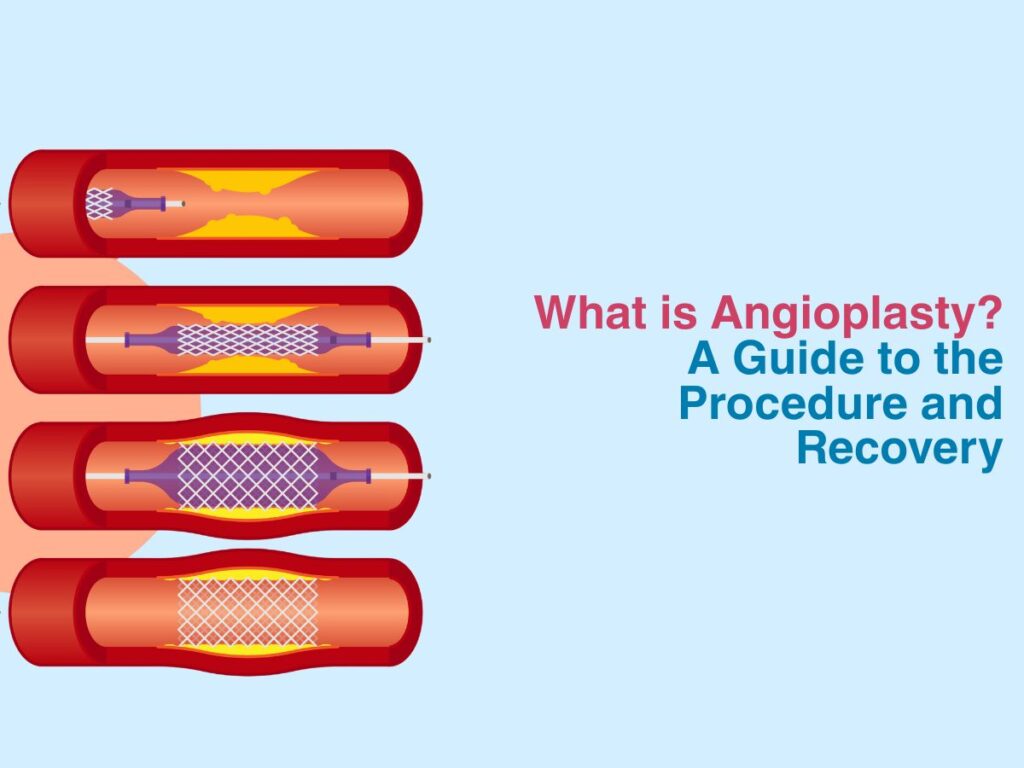
Heart disease is one of the leading causes of death worldwide, and blockages in the arteries supplying blood to the heart are a major contributor. Angioplasty is a minimally invasive procedure that restores normal blood flow to the heart by opening up narrowed or blocked coronary arteries.
Over the years, angioplasty has evolved significantly—from plain balloon angioplasty to advanced stent-based and structural heart interventions. This blog will explain what angioplasty is, why it is performed, the different types of angioplasty available today, benefits, risks, and frequently asked questions (FAQs).
1. What is Angioplasty?
Angioplasty, also known as percutaneous coronary intervention (PCI), is a non-surgical procedure used to open narrowed or blocked arteries. It involves inserting a thin, flexible catheter into an artery (usually from the wrist or groin) and guiding it to the heart. Once the catheter reaches the blocked artery, doctors use specialized tools—such as balloons or stents—to widen the artery and restore proper blood flow.
2. Why is Angioplasty Performed?
Angioplasty is recommended for patients with coronary artery disease (CAD). CAD occurs when fatty deposits (plaques) build up in the coronary arteries, restricting blood flow to the heart muscle. This can lead to:
- Chest pain (angina)
- Shortness of breath
- Fatigue
- Heart attack (if the artery is completely blocked)
Angioplasty helps relieve these symptoms and, in many cases, prevents severe heart complications.
3. Types of Angioplasty
There are several types of angioplasty, depending on the nature of the blockage, the location, and the patient’s condition.
3.1 Balloon Angioplasty (PTCA)
- One of the earliest forms of angioplasty.
- A balloon-tipped catheter is inserted into the blocked artery and inflated to compress the plaque against the artery walls.
- While effective in some cases, balloon angioplasty alone has a higher chance of re-narrowing (restenosis).
3.2 Coronary Stenting
- The most common angioplasty technique today.
- After balloon angioplasty, a stent (tiny metal mesh tube) is placed inside the artery to keep it open.
- Types of stents:
- Bare Metal Stents (BMS) – Basic stents, but higher chance of restenosis.
- Drug-Eluting Stents (DES) – Coated with medication that prevents scar tissue growth and reduces restenosis risk.
- Bioresorbable Vascular Scaffolds (BVS) – Temporary stents that dissolve after the artery heals.
3.3 Laser Angioplasty
- Uses a laser beam to vaporize plaque inside the artery.
- Helpful in patients with hard, calcified, or complex blockages.
3.4 Rotational Atherectomy (Rotablation)
- A tiny diamond-tipped drill (rotablator) is used to break down hardened plaque.
- Used in patients with severe calcification where balloons and stents cannot pass.
3.5 Cutting or Scoring Balloon Angioplasty
- Uses balloons with tiny blades or scoring wires to cut into the plaque before expanding the artery.
- Reduces risk of artery recoil and improves results.
3.6 Carotid and Peripheral Angioplasty
- Angioplasty is not limited to the heart—it is also performed on arteries in the neck (carotid angioplasty) and legs (peripheral angioplasty) to prevent stroke or limb ischemia.
3.7 Primary Angioplasty (Emergency Angioplasty)
- Performed immediately during a heart attack (STEMI).
- The fastest and most effective way to restore blood flow and save heart muscle.
4. Benefits of Angioplasty
- Immediate relief from chest pain and breathlessness.
- Prevents heart attacks and improves survival in high-risk patients.
- Minimally invasive—short recovery time compared to open-heart surgery.
- Improves exercise tolerance and quality of life.
5. Risks and Complications of Angioplasty
While angioplasty is generally safe, potential risks include:
- Bleeding or bruising at the catheter site
- Blood clot formation within the stent
- Restenosis (narrowing again)
- Rarely, heart attack, stroke, or kidney complications (from dye used)
Modern drug-eluting stents and advanced imaging techniques (like IVUS and OCT) have significantly reduced these risks.
6. Recovery After Angioplasty
- Most patients are discharged within 1–2 days.
- Medications like antiplatelets (Aspirin, Clopidogrel) must be continued to prevent clots.
- Lifestyle modifications (diet, exercise, quitting smoking) are crucial for long-term results.
- Regular follow-up with a cardiologist is essential.
7. Difference Between Angioplasty and Bypass Surgery
- Angioplasty: Minimally invasive, performed via catheter, shorter recovery. Suitable for single or limited blockages.
- Bypass Surgery (CABG): Open-heart surgery, bypasses blocked arteries using grafts. Preferred in patients with multiple or complex blockages, diabetes, or weak heart function.
FAQs on Angioplasty
1. Is angioplasty painful?
No. It is performed under local anesthesia and sedation. Patients may feel mild pressure but no pain.
2. How long does angioplasty take?
Typically 30–90 minutes, depending on the complexity of the blockage.
3. How long do stents last?
Modern drug-eluting stents are designed to last a lifetime. With proper medication and lifestyle, the success rate is very high.
4. Can angioplasty cure heart disease?
It relieves blockages, but heart disease is a chronic condition. Lifestyle modifications and regular check-ups are essential.
5. When is bypass surgery better than angioplasty?
In patients with multiple blockages, left main artery disease, diabetes, or reduced heart pumping, bypass is often a better option.
6. How soon can I return to work after angioplasty?
Most patients can resume light work in 1 week and normal routine within 2–3 weeks.
7. What foods should I eat after angioplasty?
Focus on a heart-healthy diet: fruits, vegetables, whole grains, nuts, olive oil, and lean proteins. Avoid fried, processed, and sugary foods.
Contact Details
📍 AK Heart & Diabetes Center – Annapurna Polyclinic (Sullurpeta)
Address:
Old Name – Dr. Masthanamma Hospital
Government Hospital Road, Near Government Hospital
Sullurpeta, Andhra Pradesh – 524121
Services: General & Interventional Cardiology, Diabetes Management, Heart Check-ups
Timings: Mon–Sat | 9 AM – 9 PM
📍 Aster Narayanadri Hospital (Tirupati)
Address:
Aster Narayanadri Hospital – Cardiology Department
National Highway 71, Renigunta Road, SV Auto Nagar
Tirupati, Andhra Pradesh – 517506
Specialties: Heart Failure, Angioplasty, Stenting, TAVR/TAVI, Complex Coronary Interventions
Hours: Open 24 hours