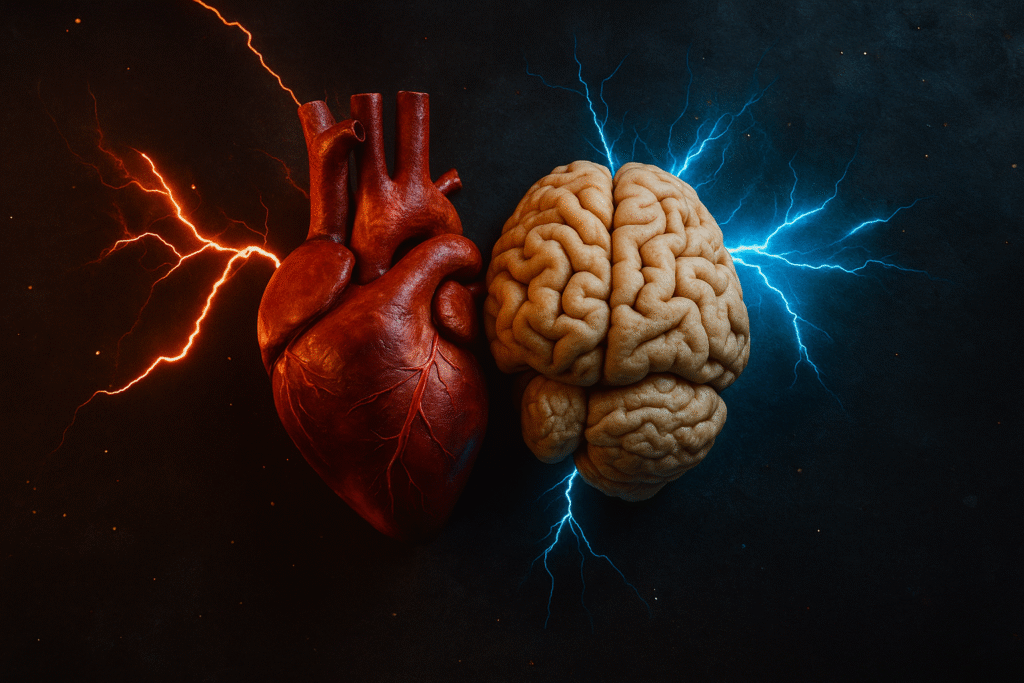
The brain and the heart are often seen as separate entities — one as the seat of thoughts and emotions, the other as the engine of life.
In reality, they are intricately connected through a complex network of nerves, hormones, and electrical signals. Every heartbeat fuels the brain with oxygen and nutrients, while the brain regulates heart rate, rhythm, and vascular tone.
From stress and depression to stroke and arrhythmia, the brain–heart relationship defines how the body maintains balance and how diseases evolve. Understanding this connection is vital to achieving holistic cardiovascular and neurological health.
1. The Brain–Heart Axis: A Two-Way Street
The communication between the brain and the heart happens primarily through the autonomic nervous system (ANS), which operates automatically without conscious control.
The ANS has two key branches:
- Sympathetic system (“accelerator”) – increases heart rate, blood pressure, and contractility.
- Parasympathetic system (“brake”) – slows the heart rate and promotes recovery.
A healthy balance between these two systems is essential. When the axis is disturbed, it can lead to hypertension, arrhythmias, Takotsubo (stress-induced) cardiomyopathy, and even sudden cardiac death.
2. How the Brain Influences the Heart
a. Emotional Stress and Cardiac Function
Prolonged stress, anxiety, and anger activate the hypothalamic–pituitary–adrenal (HPA) axis, releasing stress hormones like adrenaline and cortisol.
These lead to:
- Elevated heart rate and blood pressure
- Endothelial dysfunction
- Myocardial ischemia or even plaque rupture
A well-known example is Takotsubo Cardiomyopathy, where severe emotional stress causes temporary left-ventricular dysfunction that mimics a heart attack.
b. Depression and Heart Disease
Depression doubles the risk of coronary artery disease and worsens recovery after heart attacks.
This link is mediated by:
- Autonomic imbalance
- Platelet activation
- Systemic inflammation
- Reduced medication adherence and poor lifestyle choices
c. Neurological Disorders with Cardiac Effects
- Stroke: Can lead to neurogenic stunned myocardium and arrhythmias.
- Epilepsy: May cause post-seizure cardiac arrhythmias or rarely asystole.
- Subarachnoid hemorrhage: Often produces ECG changes, QT prolongation, and left-ventricular dysfunction due to catecholamine surge.
3. How the Heart Influences the Brain
a. Low Perfusion and Cognitive Decline
When cardiac output decreases, the brain is one of the first organs affected.
Conditions like heart failure cause chronic cerebral hypoperfusion, resulting in:
- Memory loss
- Reduced concentration
- Higher risk of dementia
This phenomenon is referred to as cardiogenic cognitive impairment.
b. Atrial Fibrillation and Stroke
Atrial fibrillation (AF) increases stroke risk fivefold because clots can form in the left atrial appendage and travel to the brain.
Proper anticoagulation is crucial to prevent ischemic stroke and preserve brain health.
c. Heart Failure and Brain Injury
In advanced heart failure, reduced blood flow and chronic inflammation can lead to brain microvascular injury, contributing to depression, poor attention, and slower recovery.
4. The Neurocardiology Spectrum
The growing field of neurocardiology studies how the brain and heart influence each other in health and disease.
| Condition | Primary Organ | Cardiac Impact | Neurological Impact |
|---|---|---|---|
| Stress Cardiomyopathy | Brain (stress response) | LV dysfunction | Emotional trigger |
| Cardioembolic Stroke | Heart (AF, LV thrombus) | Source of embolus | Cerebral infarction |
| Autonomic Neuropathy | Brain (diabetes, aging) | Loss of HR variability | Orthostatic hypotension |
| Heart Failure | Heart | Low cardiac output, cytokine release | Cognitive decline |
| Subarachnoid Hemorrhage | Brain | QT prolongation, arrhythmia | Vasospasm, coma |
5. Shared Risk Factors: What Damages One, Damages the Other
Both organs thrive on healthy vessels and adequate oxygen supply.
Their shared risk factors include:
- Hypertension
- Diabetes mellitus
- Dyslipidemia
- Smoking
- Obesity
- Chronic stress
- Sleep disorders
Among these, hypertension stands out as the strongest common link between stroke, dementia, and coronary artery disease.
6. The Role of Stress, Sleep, and the Mind
Stress
Chronic stress increases cortisol and sympathetic activity, raising the risk of hypertension, arrhythmias, and myocardial infarction.
Sleep
Poor sleep quality and conditions like obstructive sleep apnea are strongly associated with hypertension, atrial fibrillation, and cognitive decline.
Improving sleep hygiene and screening for sleep apnea are critical for both heart and brain protection.
Mind–Body Interventions
Practices such as meditation, yoga, and mindfulness have demonstrated measurable benefits:
- Reduced resting heart rate and blood pressure
- Improved heart rate variability (HRV)
- Enhanced cognitive clarity and emotional balance
7. Clinical Implications: Managing the Brain–Heart Duo
A. In Cardiac Patients
- Screen for cognitive decline, depression, and anxiety.
- Use anticoagulation in atrial fibrillation based on CHA₂DS₂-VASc score.
- Optimize heart failure management to maintain adequate brain perfusion.
B. In Neurological Patients
- Perform ECG and echocardiogram post-stroke to detect underlying cardiac issues.
- Monitor for arrhythmias following acute brain injury or hemorrhage.
- Manage autonomic dysfunction with cautious use of beta-blockers or ivabradine.
8. Emerging Science and Future Directions
- Heart Rate Variability (HRV): A non-invasive biomarker reflecting autonomic balance.
- Functional MRI Studies: Reveal how the heart modulates emotional processing centers in the brain.
- Vagus Nerve Stimulation: Explored for heart failure and treatment-resistant depression.
- Neurohormonal Modulation: New therapies such as SGLT2 inhibitors show dual heart-brain benefits through metabolic and anti-inflammatory pathways.
9. Prevention: Nurturing Both Brain and Heart
| Aspect | Practical Recommendation |
|---|---|
| Blood Pressure | Maintain below 130/80 mmHg |
| Glucose Control | Keep HbA1c under 7% |
| Lipid Levels | LDL below 70 mg/dL in high-risk patients |
| Physical Activity | 30 minutes brisk walk, 5 days per week |
| Diet | Mediterranean or DASH diet |
| Sleep | 7–8 hours of quality sleep |
| Stress | Practice meditation or deep breathing |
| Screening | Regular checks for BP, lipids, and cognition |
10. Takeaway: One System, Two Organs, One Health
The brain and heart are partners in every heartbeat and every thought.
When one is affected, the other soon follows.
Protecting heart health is protecting brain health — and vice versa.
A truly preventive approach to cardiology must always include the mind.
Think Brain–Heart. Treat the Whole Person.
Frequently Asked Questions (FAQs)
1. Can stress really cause heart disease?
Yes. Chronic stress activates the sympathetic system and stress hormones like cortisol, increasing blood pressure and damaging the heart’s vessels over time.
2. Why do some stroke patients develop heart problems?
Stroke can disrupt brain centers that regulate heart rhythm and blood pressure, leading to arrhythmias or cardiac injury.
3. How does heart failure affect the brain?
Heart failure reduces blood flow to the brain, leading to cognitive decline, poor memory, and slower information processing.
4. Are depression and heart disease linked?
Yes. Depression can increase inflammation, impair heart rhythm control, and lower treatment adherence, worsening heart disease outcomes.
5. What lifestyle habits protect both brain and heart health?
Regular exercise, a balanced diet, good sleep, stress management, and control of risk factors like diabetes and hypertension protect both organs simultaneously.
6. Can meditation or yoga really help the heart?
Multiple studies show that meditation and yoga improve heart rate variability, lower blood pressure, and enhance emotional regulation — all beneficial for long-term heart and brain health.
About Dr. Abhishek Kasha
Dr. Abhishek Kasha is a leading Interventional Cardiologist, widely recognized for his skill in complex angioplasties, advanced imaging-guided interventions, physiology-based PCI, and high-risk coronary procedures.
With a passion for precision-driven care, Dr. Kasha has brought world-class heart treatments to Rayalaseema, ensuring patients in the region do not need to travel far for advanced cardiology care. His work combines compassion with cutting-edge techniques, transforming outcomes for patients with challenging heart conditions.
Consulting Location
ASTER Narayanadri Hospital
Tirupati, Andhra Pradesh